


A pet’s final moments should look like the rest of their life: warm, familiar, and surrounded by the people and places they love. That is the heart of at-home euthanasia, and it is what makes the difference between a passing that feels like a clinical event and one that feels like a final gift. There is no carrier, no car ride, no fluorescent lighting, no waiting room full of strangers, no unfamiliar smells. Instead, there is the patio your dog has napped on for ten summers. The sunny patch on the rug where your cat has claimed since she was a kitten. The corner of the couch that became theirs the day you brought them home. Your hands, your voice, their favorite blanket, and as much time as you need.
Dr. Libby Hays is a Certified Hospice and Palliative Care Veterinarian who has dedicated her practice entirely to helping families say goodbye well. Her in-home euthanasia services in Bend are built around honoring your pet’s life and giving you the chance to create an ending shaped by love rather than logistics. If you are holding this decision and are not sure where to begin, you are welcome to reach out. There is no wrong time to ask.
Why Home Matters at the End
- Familiar places ease the body and the mind: the smells, sounds, and textures of home keep a pet calm in a way no clinic can replicate.
- The day can be exactly what you want it to be: a slow morning, favorite foods, a final walk, sunshine on the grass, whatever feels right.
- There is no clock: no waiting room, no exam room, no need to leave when the medical part is done.
- Their last memory is of being loved: in the arms of the people they trust, in the place they feel safest.
What Does a Peaceful Passing Actually Look Like?
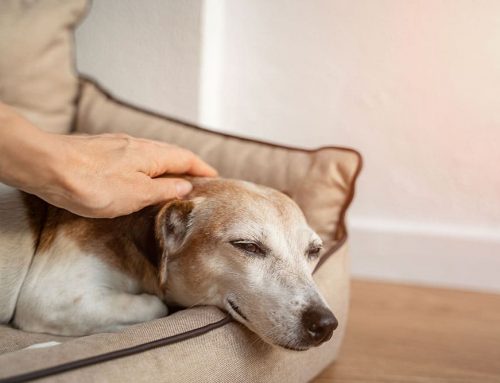
It looks like a regular afternoon, mostly. The dog who can still walk a little might wander the yard one more time, sniffing the corners he has sniffed for years, eating a hamburger that would have been off-limits any other day. The cat who has not jumped on the bed in months might curl up on her favorite blanket in a sun stripe by the window. The senior who can barely lift his head still feels the same hand on his ear, the same voice telling him he is a good boy, the same family gathered around him as the medicine takes effect.
This is what at-home euthanasia makes possible, and it is hard to overstate how different it is from the alternative. We’re not trying to say a regular veterinary practice won’t provide you the best experience they possibly can- and many do a wonderful job. But a veterinary hospital comes with sights, sounds, smells, and memories that influence those final moments. A pet who passes at home does not spend their last conscious minutes confused and afraid. They do not wonder why they are in the cold, hard place that always means uncomfortable things. They do not associate their final memory with a stranger and a stainless steel table. Instead, they drift off in the place where they have always been most themselves, with the smells and sounds of home around them, and with their person right there.
For pets, who live so much through their senses, that environment is not a small detail. It is the whole experience.
What Can You Give Your Pet on Their Last Day?
The thing families discover, almost without exception, is that they want to give their pet a beautiful last day, and at home it is genuinely possible. There are no rules anymore. The diet restrictions do not apply. The “no human food” guideline does not apply. The “no bed” rule does not apply.
A few things families often do with the time they have:
- A favorite meal, whether that is a steak, a hamburger, ice cream, the bacon they have begged for at the breakfast table their entire life, or just the regular food they love delivered with extra love
- A slow walk or wagon ride through the yard or to the end of the driveway, if they are still able, to take in the smells of the world one more time
- Time in the spot they chose for themselves long ago, whether the spot under the tree, the corner of the couch, the rug by the fireplace, the patio in the sunshine
- Family gathered, whoever the pet considered theirs, present in whatever way feels right
- Photos, of the family together, of the pet in their favorite place, of the small ordinary things that will matter later
- Quiet, unhurried time, with hands on them and gentle words said out loud, because they hear and they know
None of this requires planning weeks ahead. Sometimes the day comes together in an afternoon. What matters is that the time exists at all, and that it belongs to your pet and your family rather than to a clinic’s schedule.
Why the Setting Changes Everything for an Anxious Pet
Some pets handle the vet clinic well. Many do not, and that becomes more true as they age. The senior dog who used to tolerate visits is now arthritic and frightened by the slippery floor. The cat who hated the carrier at age five truly cannot bear it at age fifteen. Pets who have been through a long illness have often spent more time at clinics in the last year than they did across the rest of their lives, and the place itself has become tied to discomfort, restraint, and fear.
For those pets, the stress of a final clinic visit is not abstract. It is real, and it is the last thing they will experience.
At home, none of that happens. The cat does not have to go in the carrier. The dog does not have to climb into the car when his hips can barely manage it anymore. There is no panting in the lobby, no shaking on the exam table, no memories of needles or the last surgery they had there. No sounds of another scared pet in the room down the hall. The person they trust most is the one holding them, and the place they trust most is the place they are in. The medicine works the same way it would anywhere else, but the experience around it is entirely different.
This matters especially for cats, who can mask discomfort to a degree that often hides just how much the clinic environment costs them. A cat who passes at home gets to be a cat right up until the end, in her own kingdom, on her own terms.
What Families Often Don’t Expect
A few things tend to surprise families about saying goodbye at home, in ways that turn out to matter.
The first is how unhurried it feels. There is no clock running. After the medicine, there is no one knocking on the door asking if you are ready to leave. You can sit with your pet for as long as you need to, however that looks. Some families want a few minutes; some want a long time. Both are right, and at home, both are possible.
The second is how visible the relief is. The sedation step, given before the final medication, produces a depth of relaxation that families often describe as the moment they could see their pet finally let go of the discomfort they had been carrying. For a pet who has been hurting, even quietly, that visible easing is its own gift.
The third is what they remember afterward. Families who say goodbye at home almost always describe the day later in the same way: heartbreaking, yes, but also peaceful, and right. The setting becomes part of the memory. Years later, the spot under the tree, the corner of the couch, the patch of sunshine on the patio is still the place where their pet had a beautiful ending, not the place where something terrible happened. They are grateful for the years spent together, and for the chance to give their pet a truly peaceful and happy last day.
That memory matters more than people expect it to. It does not erase the grief, but it gives the grief somewhere good to live.
How Do You Prepare for the Day?
Preparation is mostly about giving yourself permission to slow down and design the day around what you want it to be.
- Take the time to review the process. We’ll handle everything, but it’s easier when you know what to expect and why we are doing what we do.
- Choose the spot. The bed they love, the couch they have claimed, the patio in the sunshine, the rug by the window, the floor next to your chair. Wherever they are most at home.
- Make it soft. Their favorite blanket, an extra towel, pillows if they want them. Comfort matters.
- Plan the food. Whatever they have loved most, whatever has been forbidden, whatever you have been saving for a special occasion. This is the occasion.
- Decide who will be there. Adult family members, close friends, anyone your pet considers theirs. There is no right number.
- Settle the household. Pause the deliveries, mute the doorbell, turn off anything that might startle, and keep the space quiet. Music if you want it, silence if you do not.
- Have water and tissues nearby. For you, not for your pet. Don’t feel like you need to hold in your emotions just because we’re there. We’ve been through this with our own pets, and have felt what you are experiencing.
- Think about what comes after. Knowing the next steps for cremation or burial ahead of time means the practical pieces do not crash in on a moment that should belong to your goodbye.
Our aftercare options include cremation coordination and memorial keepsakes, and for families considering home burial, our guide to Oregon laws on home burials for pets covers the practical and legal pieces. Our palliative care work often includes these conversations earlier, so the day, when it comes, is shaped by you rather than rushed.
Frequently Asked Questions
Will My Pet Feel Any Pain?
They should not. The sedation given first produces a deep relaxation, so they do not feel the final medication. Many families describe the sedation as the moment they could finally see their pet release tension they had been carrying, sometimes for months. If you have a particularly anxious or painful pet, tell us. We have the ability to customize the right medications and protocols for what your pet needs.
Can Other Pets Be Present?
They can, if it fits your family. Some pets benefit from being present and seem to understand what has happened, which can ease their own adjustment afterward. Others do better elsewhere in the home. There is no single right approach, and we will talk through what fits your particular household.

What If My Pet Has a Better Day Right Before the Appointment?
This happens, and it is one of the hardest moments in the whole process. Brief rallies in seriously ill pets are common, and they do not mean the underlying condition has reversed. We will talk through what you are seeing together and help you decide whether to proceed or wait. The decision stays yours. A difficult thing to consider is that choosing a peaceful passage before they are in serious pain or discomfort- even if it feels like you could have had a few more good days with them- is better than waiting, and then regretting that maybe you waited too long.
What If I Cannot Stop Crying?
You do not have to. Your pet has seen you cry before, and they know your voice in any state. The day is not about being composed; it is about being present. Tears, laughter, stories, silence, all of it belongs. You’ll receive no judgement from us. We understand how hard this is.
Can I Hold My Pet Through the Whole Thing?
Yes. Most families do. Your hands on them, your voice in their ear, your familiar smell is exactly what they want at the end. There is no better place for them to be. However, if you choose to stay until they fall asleep and then step out for the final injection, that’s okay too. Once they fall asleep, all they experience is peace, so if it is too hard to be present for the last step, take comfort in knowing that they’ve already felt your love until the last moment of their consciousness.
The Lasting Gift of a Peaceful Goodbye
The way a pet leaves becomes part of how the family remembers them. A goodbye that happens at home, in their favorite place, surrounded by the people they love, becomes a memory families return to with gratitude even as the grief settles in. The sunshine on the patio, the favorite blanket, the last bite of something they were never allowed to have, the hand on their ear as they drifted off- these are the details that stay.
If you are thinking about at-home euthanasia for your pet, or if you would like to begin the conversation before the day comes, please request an appointment or reach out. There is no wrong time to start, and you do not have to figure it out alone. Dr. Libby has helped countless families with hospice, palliative care, and in-home euthanasias for dogs and cats in Bend and central Oregon.


Leave A Comment